

What are peptides and why do they matter for health and performance?
Peptides are short chains of amino acids—essentially tiny proteins—that act as messengers in the body. They help cells communicate, regulate hormones and metabolism, influence immune activity, and participate in tissue repair. Because of their signaling roles, carefully selected peptides can be used in clinical practice to support targeted outcomes such as body composition, recovery from training or injury, healthy aging, and metabolic control.
In a clinical setting, “peptide therapy” refers to the supervised use of specific, evidence-based peptide medications (and closely related peptide-class agents) to influence these biologic pathways. A modern peptide program goes far beyond a one-size-fits-all injection: it is a personalized protocol built on diagnostics, clear goals, safety review, and ongoing measurement.
How does peptide therapy work at the cellular level?
Most peptides bind to a receptor on the surface of a cell—like a key turning a lock—and trigger signaling cascades inside that cell. Depending on the peptide, downstream effects can include:
- Metabolic shifts that improve insulin sensitivity or curb appetite.
- Neuroendocrine signaling that modulates sleep, stress response, or hormone output.
- Tissue remodeling signals that influence collagen synthesis, musculoskeletal repair, or skin renewal.
- Immunomodulation that can nudge immune tone toward balance.
Because these signals are highly specific, clinicians match the peptide choice and dose to the goal, patient profile, and safety constraints.
Which peptide-class therapies have the strongest evidence today?
A number of peptide-class medicines are backed by rigorous data and are FDA-approved for defined indications. Among the most widely used in longevity and metabolic clinics are GLP-1 receptor agonists (for example, semaglutide at anti-obesity doses), which:
- Promote clinically meaningful weight loss when paired with nutrition and activity changes.
- Improve cardiometabolic risk markers (blood pressure, lipids, inflammation) in many patients.
- Have demonstrated reduced major cardiovascular events in a large outcomes trial of adults with overweight/obesity and cardiovascular disease.
Other “peptide” topics you might hear about—such as oncology-specific peptide therapies or research-grade cosmetic peptides—exist on a spectrum from well-studied to early-stage to not approved for human use. A responsible Sarasota clinic will clearly distinguish between approved, evidence-based options and investigational products, and will explain how any off-label use is evaluated for risk and benefit.
What goals can a Sarasota peptide therapy program target?
A personalized program can be tuned to one or more of the following:
- Metabolic health & body composition: appetite control, insulin sensitivity support, and sustainable fat loss paired with lean-mass preservation.
- Healthy aging & vitality: energy, sleep quality, and recovery—framed within a broader longevity plan.
- Musculoskeletal recovery: adjunct support for tendon or soft-tissue rehab when appropriate (within evidence and regulatory limits).
- Skin & hair quality: select topical or procedural adjuncts in dermatology settings (evidence varies by product; many remain cosmetic-grade rather than medical therapy).
The best results come when peptide protocols are integrated with nutrition, resistance training, sleep optimization, stress management, and micronutrient repletion—and when progress is tracked with objective metrics, not just “how you feel.”
What does a clinician-supervised peptide plan actually include?
A high-quality Sarasota peptide therapy program should include:
- Comprehensive intake and diagnostics: medical history, medications, cardiometabolic labs, body composition, and (when relevant) hormone evaluation.
- Clear goal setting: weight-loss targets, fitness milestones, energy/sleep objectives, or rehab outcomes.
- Evidence-based selection: using approved peptide-class medicines where indicated; transparent discussion of any off-label use.
- Safety screening: contraindications, drug–drug interactions, and a plan for side-effect monitoring.
- Lifestyle integration: nutrition frameworks, resistance and aerobic programming, sleep and stress protocols.
- Follow-up schedule: check-ins to titrate dosing, assess tolerance, and confirm progress with measurable markers.
How does safety, quality, and FDA status factor into peptide therapy?
Safety starts with using FDA-approved medicines for their approved indications whenever possible and avoiding unapproved products. In recent years, U.S. regulators and medical societies have warned clinicians and consumers about unapproved or compounded peptide products—especially those purchased online or labeled “research only.” Concerns include:
- Content uncertainty (dosage inaccuracies, impurities).
- Dosing errors, particularly with compounded injectables.
- Counterfeit products circulating in the supply chain.
- Peptides on risk alerts (e.g., BPC-157, melanotan II) flagged for potential safety and quality issues.
A reputable Sarasota clinic will source medications responsibly, practice informed consent, document indications, and explain the difference between brand-name FDA-approved products and any compounded or investigational products that may be considered when appropriate and lawful.
What side effects and risks should patients know about?
Side effects vary by agent. With GLP-1 receptor agonists (a peptide-class therapy), GI symptoms (nausea, fullness, reflux), dose-dependent intolerance, and rare risks (e.g., gallbladder issues) are discussed during consent. Risk management includes:
- Gradual dose titration to improve tolerance.
- Nutrition strategies (protein distribution, fiber, hydration) to reduce GI effects.
- Monitoring of blood pressure, glycemia, and lab markers.
- Stopping rules for warning signs and a plan for maintenance if goals are achieved.
For any non-approved peptide proposed off-label, the discussion must cover the strength of evidence, known and unknown risks, product sourcing, and exit strategy if benefits do not materialize.
How is peptide therapy integrated into a longevity or weight-management roadmap?
Peptides are tools, not magic. In a high-touch program, clinicians:
- Pair GLP-1 therapy with resistance training to protect lean mass and resting metabolic rate.
- Use periodized nutrition (adequate protein, micronutrients, and fiber) to support appetite control and gut comfort.
- Align sleep and stress routines to support appetite hormones, insulin sensitivity, and recovery.
- Track body composition and fitness metrics (not just scale weight) to make sure fat loss is healthy and sustainable.
- Develop maintenance plans for the months after active therapy so results are durable.
Why choose Reveal Vitality for peptide therapy in Sarasota?
Reveal Vitality & Longevity Institute provides a concierge, physician-led model that blends functional and integrative medicine with advanced diagnostics. For patients seeking Sarasota peptide therapy, the Reveal team offers:
- A dedicated peptide therapy service within a broader longevity program.
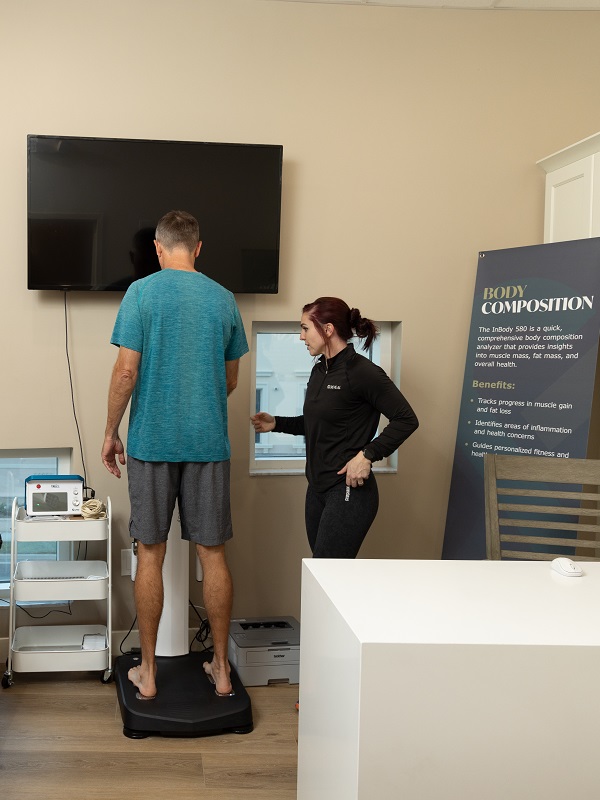
- Rigorous intake and testing, including cardiometabolic panels and body-composition analysis.
- Evidence-aligned protocols emphasizing FDA-approved medications where indicated and transparent education about any off-label considerations.
- Lifestyle architecture—nutrition, strength and aerobic plans, sleep, stress reduction—to convert short-term gains into long-term healthspan.
- Close follow-up with adjustments based on data, not guesswork.
What does a first visit for peptide therapy at Reveal Vitality look like?
A typical new-patient experience includes:
- Extended consultation to map goals, history, meds, and prior attempts at weight management or vitality programs.
- Baseline testing (labs, body composition; sometimes cardiovascular assessments if indicated).
- Shared decision-making about options, including peptide-class medications, expected benefits, risks, and alternatives.
- Personalized care plan with clear milestones for tolerance, dose steps, and lifestyle actions.
- Scheduled follow-ups (e.g., at 4–6 weeks, then every 8–12 weeks) for dose titration, nutrition coaching, and progress checks.
Which Sarasota patients are good candidates for peptide therapy?
Candidates typically include adults who:
- Have overweight or obesity and meet criteria for an FDA-approved GLP-1 therapy.
- Are committed to structured lifestyle changes and body-composition monitoring.
- Need accountability and coaching to convert medication momentum into durable habits.
- Have cardiometabolic risk (hypertension, dyslipidemia, insulin resistance) where weight loss and fitness improvements can meaningfully lower risk.
- Prefer a concierge model with rapid access and thorough education.
Patients who are pregnant or breastfeeding, who have a history of certain endocrine tumors, or who take contraindicated medications need specialized guidance or alternative strategies.
How does Reveal Vitality measure progress during peptide therapy?
The practice emphasizes objective, repeatable metrics, such as:
- Body composition (fat mass, lean mass, visceral fat).
- Waist circumference and blood pressure.
- Glycemic markers (fasting glucose, A1c) and lipid subfractions (e.g., non-HDL, ApoB).
- Fitness indicators and day-to-day energy and sleep measures.
- Adverse-event tracking and dose tolerance.
These data guide dose decisions, nutrition updates, and training periodization, ensuring the plan stays personalized and safe.
How do Dr. Davis, Dr. Jordan, and Dr. Andarcia personalize peptide therapy?
- Christopher Davis, MD, FACC aligns peptide-class options with cardiometabolic risk and cardiovascular prevention. For patients with established heart disease or high risk, he integrates peptide therapy with lipid and blood-pressure management, fitness programming, and inflammation reduction, always with an eye on outcomes that matter (events avoided, stamina gained).
- Angela Jordan, DNP, FNP-BC focuses on behavior design and metabolic resiliency. She helps patients build protein-forward meal structures, resistance-training routines, and sleep/stress systems that make peptides more tolerable and effective—and keep results going after taper.
- Victoria Andarcia, MD brings women’s hormone expertise, aligning peptide protocols with perimenopause/menopause physiology, thyroid status, and micronutrient needs. Her goal is steady energy, mood, and body-composition improvements that fit real life.
What about cost, access, and ethical marketing?
Peptide therapy can involve out-of-pocket costs. Reveal Vitality provides transparent pricing, prioritizes approved products where indicated, and clearly labels any off-label or investigational use. The team discusses maintenance strategies upfront, avoids unrealistic promises, and ensures that medications are sourced from reputable, lawful channels.
What results can patients expect over 3–12 months?
Results vary, but many patients experience:
- Clinically meaningful fat loss with preservation of lean mass when training and protein goals are met.
- Improvements in blood pressure, glycemic control, lipids, and inflammatory markers.
- Better energy, sleep, and daily function.
- Increased confidence and a clear maintenance plan to prevent regain.
The Reveal philosophy is simple: use peptide therapy as a bridge to durable habits—so your health continues trending upward long after the dose plateaus.
Mini Bios: Meet the Sarasota Clinical Team
Christopher Davis, MD, FACC
Founder & CEO of Reveal Vitality, Dr. Davis is a triple board-certified cardiologist (Internal Medicine, Cardiovascular Disease, Interventional Cardiology). He blends integrative cardiology, functional medicine, and precision diagnostics to drive safe, measurable results in metabolic and longevity care—often incorporating peptide-class medications when they’re aligned with evidence and goals.
Angela Jordan, DNP, FNP-BC
A Doctor of Nursing Practice and Board-Certified Family Nurse Practitioner, Dr. Jordan specializes in chronic illness management, metabolic optimization, and lifestyle medicine. She designs realistic, data-driven peptide therapy roadmaps that include nutrition periodization, resistance training, and sleep-stress routines to make results stick.
Victoria Andarcia, MD
Board-certified in Internal Medicine with advanced training in integrative and functional medicine, Dr. Andarcia focuses on women’s hormones, metabolism, and longevity. She tailors peptide protocols to life stage, thyroid and micronutrient context, and personal preferences—bridging medical therapies with day-to-day habit coaching.
References (hyperlinked)
- Reveal Vitality: Peptide Therapy in Sarasota – service overview Reveal Vitality
- Reveal Vitality: Main site – functional medicine, longevity, hormone & peptide programs Reveal Vitality
- Reveal Vitality: Longevity Therapies in Sarasota Reveal Vitality
- Reveal Vitality: Weight-Loss Program (medications include peptide therapy) Reveal Vitality
- Reveal Vitality: Dr. Victoria Andarcia – profile & services Reveal Vitality
- NEJM (SELECT Trial): Semaglutide and Cardiovascular Outcomes in Obesity New England Journal of Medicine
- Cleveland Clinic: GLP-1 Agonists – indications and overview Cleveland Clinic
- Cleveland Clinic: Semaglutide for Weight Management Cleveland Clinic
- FDA: Concerns With Unapproved GLP-1 Drugs for Weight Loss U.S. Food and Drug Administration
- FDA: Compounding Risk Alerts (including dosing errors for compounded semaglutide) U.S. Food and Drug Administration
- FDA: Warning—Counterfeit Ozempic in U.S. Supply Chain U.S. Food and Drug Administration
- Reuters: FDA warns online vendors selling unapproved GLP-1 “research” peptides Reuters
- American Diabetes Association: Statement on Compounded Incretin Agents American Diabetes Association
- Pediatric Endocrine Society: Caution on Compounded Semaglutide and Other GLP-1 RAs Pediatric Endocrine Society
- FDA: Certain Bulk Drug Substances for Compounding May Present Significant Safety Risks (includes BPC-157, melanotan II) U.S. Food and Drug Administration
 Reveal Vitality & Longevity Institute, Sarasota FL